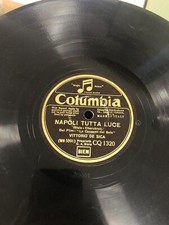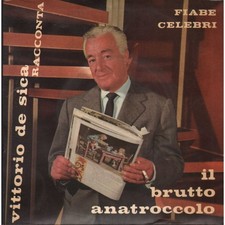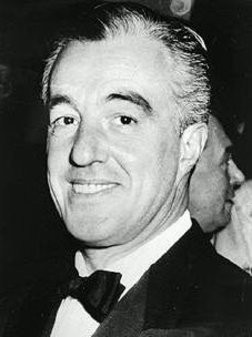
De Sica was born in Sora (Frosinone) 7th July 1901 into a lower middle class family, but spent his childhood years in Naples, where he enjoyed amateur dramatics from a tender age: he made his cinema debut in 1918 in a supporting role in "Il processo Clemenceau" by Bencivenga. Subsequently, he appeared in other films, honing his typical role as a witty, easy-going young fellow: he was only to become a box office success however in 1932, as lead actor in "Gli uomini che mascalzoni..." by Mario Camerini. After that, he continued his career as a leading film star with movies of varying merit - some memorable titles, again directed by Camerini, include "Darò un milione" (1935), "Mister Max (Il signor Max)" (1937) and "Department Store (Grandi magazzini)" (1939) - and his first experience behind the camera as director came with "Red roses (Rose scarlatte)" (1940), an adaptation of a successful play. After directing several enjoyable comedies, he changed register with the intense "The children are watching us (I bambini ci guardano)" (1943), which heralded the advent of the legendary neorealism period and marked the beginning of a successful working partnership with Cesare Zavattini: it was this collaboration, indeed, that gave rise to "Shoe Shine (Sciuscià)" (1946) and "The Bicycle Thief (Ladri di biciclette)" (1948), both of which won an Oscar and a place in the history of international cinema. "Miracle in Milan (Miracolo a Milano)" (1951) and "Umberto D." (1952) confirmed De Sica as a master in his art and marked the climax of his achievements: afterwards, only on rare occasions - worth mentioning are "The Gold of Naples (L'oro di Napoli)" (1954), "Two women (La ciociara)" (1960), "Yesterday, today and tomorrow (Ieri,oggi e domani)" (1963), "The garden of the Finzi-Continis (Il giardino dei Finzi Contini)" (1970): these last two won him another Oscar - did the film-maker truly find his old brilliance, more often realizing works that were either weakened by commercial preoccupations or plagued by sketchy intimism. Of De Sica as an actor, we must also mention the mini saga which began with "Bread, love and dreams (Pane, amore e fantasia)" (1953) by Comencini and an admirable performance in "Il Generale Della Rovere" (1959) by Rossellini. Following surgery on his lungs, he died in Neuilly (France) on 13th November 1974.
If you like Vittorio De Sica, check out these artists:
Vittorio de Sica
Vittorio de Sica
Vittorio de Sica
Vittorio de Sica
Vittorio de Sica
Vittorio de Sica
Vittorio de Sica
Vittorio de Sica
Vittorio de Sica
Vittorio de Sica
Vittorio de Sica
Vittorio de Sica
Vittorio de Sica
Vittorio de Sica
Vittorio de Sica
Vittorio de Sica
Vittorio de Sica
Vittorio de Sica
Vittorio de Sica
Vittorio de Sica
Some of Vittorio De Sica's most popular tracks include Parlami d'amore Mariù, Sono tre parole - Remastered, Tu, solamente tu, Munasterio 'e Santa Chiara, Dammi Un Bacio e Ti Dico Di Sì. Listen to these songs and discover more from their extensive catalog.
De Sica was born in Sora (Frosinone) 7th July 1901 into a lower middle class family, but spent his childhood years in Naples, where he enjoyed amateur dramatics from a tender age: he made his cinema d... Read the full biography on this page.
You can find Vittorio De Sica vinyl records and merchandise on eBay. We feature a curated selection of vinyl releases and collectibles available for purchase.
View All Similar Artists
Follow Vittorio De Sica